

506
10 SEDIMENTARY BASINS
pore pressure may now be modified by hydrodynamic flow in permeable formations, as
meteoric waters displace connate fluids. In closed systems, however, cooling may cause
subnormal pore pressures.
These changes in pore pressure and fluid chemistry affect both petroleum and mineralization. Remobilized petroleum may be trapped in hydrodynamic traps (see Section 7.2) and may undergo shallow bacterial degradation. Meteoric flow may cause further remobilization of minerals, particularly any uranium ores that have previously been
emplaced within the system. Continuing erosion will rework placer ores at the surface
and, as the rate of erosion declines, gossans and enriched zones will again develop on the
weathered surfaces of previously emplaced sulfide ores (Fig. 10.25H).
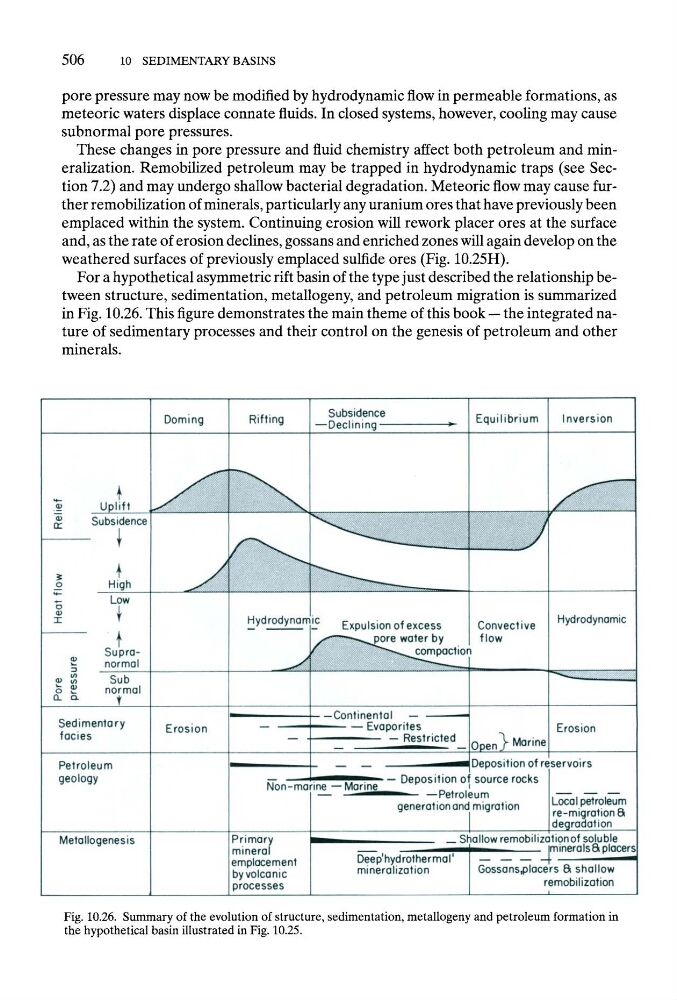
For a hypothetical asymmetric rift basin of the type just described the relationship between structure, sedimentation, metallogeny, and petroleum migration is summarized
in Fig. 10.26. This figure demonstrates the main theme of this b o o k - the integrated nature of sedimentary processes and their control on the genesis of petroleum and other
minerals.
Fig. 10.26. Summary of the evolution of structure, sedimentation, metallogeny and petroleum formation in
the hypothetical basin illustrated in Fig. 10.25.
10 SEDIMENTARY BASINS
pore pressure may now be modified by hydrodynamic flow in permeable formations, as
meteoric waters displace connate fluids. In closed systems, however, cooling may cause
subnormal pore pressures.
These changes in pore pressure and fluid chemistry affect both petroleum and mineralization. Remobilized petroleum may be trapped in hydrodynamic traps (see Section 7.2) and may undergo shallow bacterial degradation. Meteoric flow may cause further remobilization of minerals, particularly any uranium ores that have previously been
emplaced within the system. Continuing erosion will rework placer ores at the surface
and, as the rate of erosion declines, gossans and enriched zones will again develop on the
weathered surfaces of previously emplaced sulfide ores (Fig. 10.25H).
For a hypothetical asymmetric rift basin of the type just described the relationship between structure, sedimentation, metallogeny, and petroleum migration is summarized
in Fig. 10.26. This figure demonstrates the main theme of this b o o k - the integrated nature of sedimentary processes and their control on the genesis of petroleum and other
minerals.
Fig. 10.26. Summary of the evolution of structure, sedimentation, metallogeny and petroleum formation in
the hypothetical basin illustrated in Fig. 10.25.