

428
9 AUTOCHTHONOUS SEDIMENTS
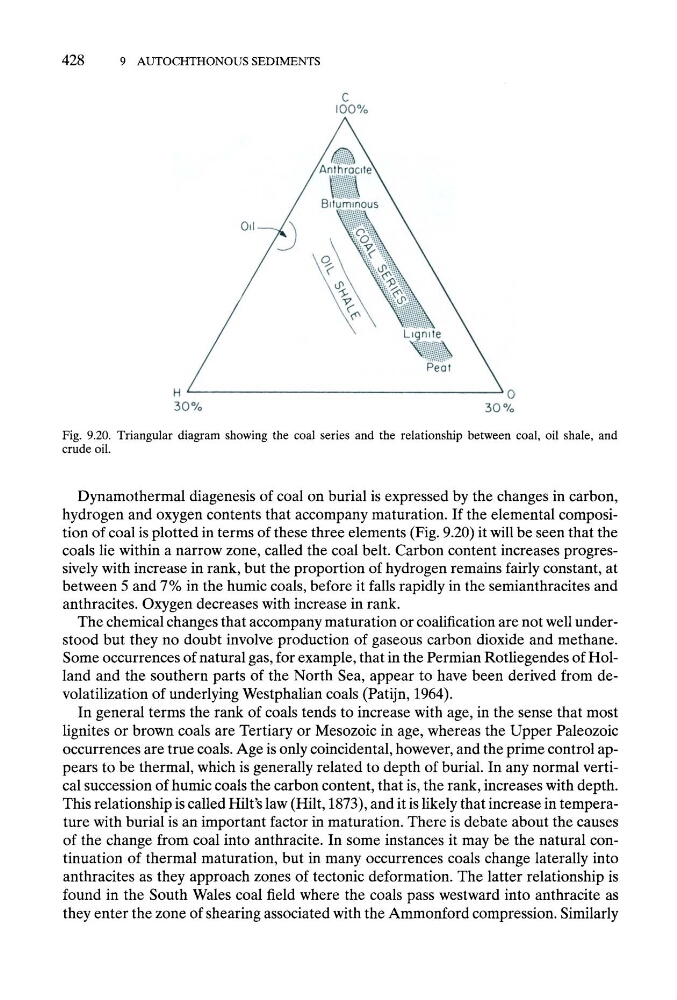
Fig. 9.20. Triangular diagram showing the coal series and the relationship between coal, oil shale, and
crude oil.
Dynamothermal diagenesis of coal on burial is expressed by the changes in carbon,
hydrogen and oxygen contents that accompany maturation. If the elemental composition of coal is plotted in terms of these three elements (Fig. 9.20) it will be seen that the
coals lie within a narrow zone, called the coal belt. Carbon content increases progressively with increase in rank, but the proportion of hydrogen remains fairly constant, at
between 5 and 7% in the humic coals, before it falls rapidly in the semianthracites and
anthracites. Oxygen decreases with increase in rank.
The chemical changes that accompany maturation or coalification are not well understood but they no doubt involve production of gaseous carbon dioxide and methane.
Some occurrences of natural gas, for example, that in the Permian Rotliegendes of Holland and the southern parts of the North Sea, appear to have been derived from devolatilization of underlying Westphalian coals (Patijn, 1964).
In general terms the rank of coals tends to increase with age, in the sense that most
lignites or brown coals are Tertiary or Mesozoic in age, whereas the Upper Paleozoic
occurrences are true coals. Age is only coincidental, however, and the prime control appears to be thermal, which is generally related to depth of burial. In any normal vertical succession of humic coals the carbon content, that is, the rank, increases with depth.
This relationship is called Hilt's law (Hilt, 1873), and it is likely that increase in temperature with burial is an important factor in maturation. There is debate about the causes
of the change from coal into anthracite. In some instances it may be the natural continuation of thermal maturation, but in many occurrences coals change laterally into
anthracites as they approach zones of tectonic deformation. The latter relationship is
found in the South Wales coal field where the coals pass westward into anthracite as
they enter the zone of shearing associated with the Ammonford compression. Similarly
9 AUTOCHTHONOUS SEDIMENTS
Fig. 9.20. Triangular diagram showing the coal series and the relationship between coal, oil shale, and
crude oil.
Dynamothermal diagenesis of coal on burial is expressed by the changes in carbon,
hydrogen and oxygen contents that accompany maturation. If the elemental composition of coal is plotted in terms of these three elements (Fig. 9.20) it will be seen that the
coals lie within a narrow zone, called the coal belt. Carbon content increases progressively with increase in rank, but the proportion of hydrogen remains fairly constant, at
between 5 and 7% in the humic coals, before it falls rapidly in the semianthracites and
anthracites. Oxygen decreases with increase in rank.
The chemical changes that accompany maturation or coalification are not well understood but they no doubt involve production of gaseous carbon dioxide and methane.
Some occurrences of natural gas, for example, that in the Permian Rotliegendes of Holland and the southern parts of the North Sea, appear to have been derived from devolatilization of underlying Westphalian coals (Patijn, 1964).
In general terms the rank of coals tends to increase with age, in the sense that most
lignites or brown coals are Tertiary or Mesozoic in age, whereas the Upper Paleozoic
occurrences are true coals. Age is only coincidental, however, and the prime control appears to be thermal, which is generally related to depth of burial. In any normal vertical succession of humic coals the carbon content, that is, the rank, increases with depth.
This relationship is called Hilt's law (Hilt, 1873), and it is likely that increase in temperature with burial is an important factor in maturation. There is debate about the causes
of the change from coal into anthracite. In some instances it may be the natural continuation of thermal maturation, but in many occurrences coals change laterally into
anthracites as they approach zones of tectonic deformation. The latter relationship is
found in the South Wales coal field where the coals pass westward into anthracite as
they enter the zone of shearing associated with the Ammonford compression. Similarly