

198
6 DEPOSITIONAL SYSTEMS
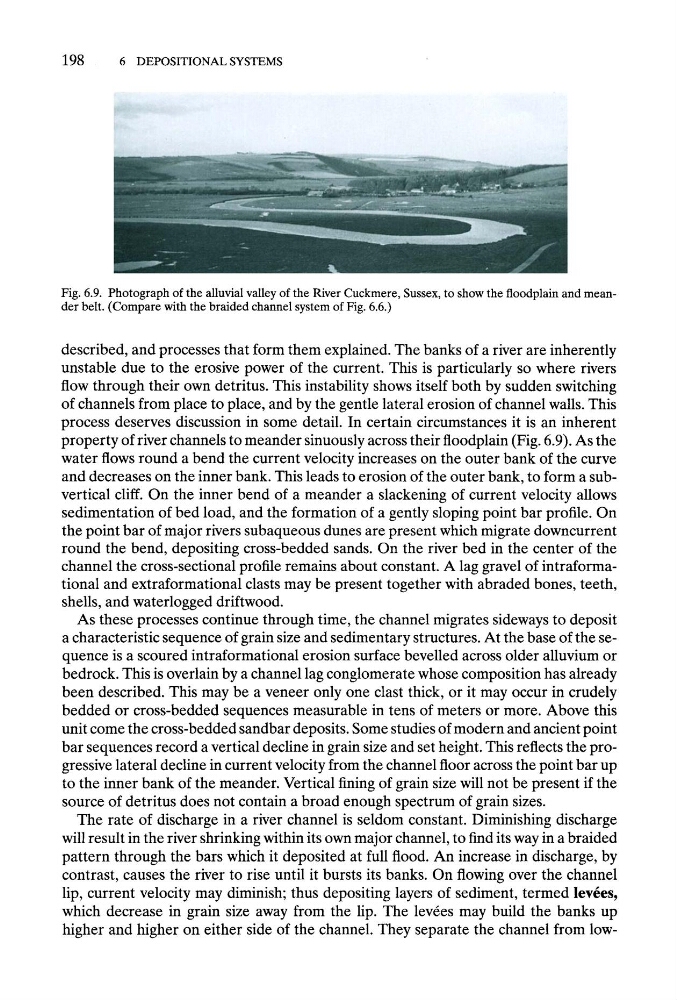
Fig. 6.9. Photograph of the alluvial valley of the River Cuckmere, Sussex, to show the floodplain and meander belt. (Compare with the braided channel system of Fig. 6.6.)
described, and processes that form them explained. The banks of a river are inherently
unstable due to the erosive power of the current. This is particularly so where rivers
flow through their own detritus. This instability shows itself both by sudden switching
of channels from place to place, and by the gentle lateral erosion of channel walls. This
process deserves discussion in some detail. In certain circumstances it is an inherent
property of river channels to meander sinuously across their floodplain (Fig. 6.9). As the
water flows round a bend the current velocity increases on the outer bank of the curve
and decreases on the inner bank. This leads to erosion of the outer bank, to form a subvertical cliff. On the inner bend of a meander a slackening of current velocity allows
sedimentation of bed load, and the formation of a gently sloping point bar profile. On
the point bar of major rivers subaqueous dunes are present which migrate downcurrent
round the bend, depositing cross-bedded sands. On the river bed in the center of the
channel the cross-sectional profile remains about constant. A lag gravel of intraformational and extraformational clasts may be present together with abraded bones, teeth,
shells, and waterlogged driftwood.
As these processes continue through time, the channel migrates sideways to deposit
a characteristic sequence of grain size and sedimentary structures. At the base of the sequence is a scoured intraformational erosion surface bevelled across older alluvium or
bedrock. This is overlain by a channel lag conglomerate whose composition has already
been described. This may be a veneer only one clast thick, or it may occur in crudely
bedded or cross-bedded sequences measurable in tens of meters or more. Above this
unit come the cross-bedded sandbar deposits. Some studies of modern and ancient point
bar sequences record a vertical decline in grain size and set height. This reflects the progressive lateral decline in current velocity from the channel floor across the point bar up
to the inner bank of the meander. Vertical fining of grain size will not be present if the
source of detritus does not contain a broad enough spectrum of grain sizes.
The rate of discharge in a river channel is seldom constant. Diminishing discharge
will result in the river shrinking within its own major channel, to find its way in a braided
pattern through the bars which it deposited at full flood. An increase in discharge, by
contrast, causes the river to rise until it bursts its banks. On flowing over the channel
lip, current velocity may diminish; thus depositing layers of sediment, termed lev~es,
which decrease in grain size away from the lip. The lev6es may build the banks up
higher and higher on either side of the channel. They separate the channel from low-
6 DEPOSITIONAL SYSTEMS
Fig. 6.9. Photograph of the alluvial valley of the River Cuckmere, Sussex, to show the floodplain and meander belt. (Compare with the braided channel system of Fig. 6.6.)
described, and processes that form them explained. The banks of a river are inherently
unstable due to the erosive power of the current. This is particularly so where rivers
flow through their own detritus. This instability shows itself both by sudden switching
of channels from place to place, and by the gentle lateral erosion of channel walls. This
process deserves discussion in some detail. In certain circumstances it is an inherent
property of river channels to meander sinuously across their floodplain (Fig. 6.9). As the
water flows round a bend the current velocity increases on the outer bank of the curve
and decreases on the inner bank. This leads to erosion of the outer bank, to form a subvertical cliff. On the inner bend of a meander a slackening of current velocity allows
sedimentation of bed load, and the formation of a gently sloping point bar profile. On
the point bar of major rivers subaqueous dunes are present which migrate downcurrent
round the bend, depositing cross-bedded sands. On the river bed in the center of the
channel the cross-sectional profile remains about constant. A lag gravel of intraformational and extraformational clasts may be present together with abraded bones, teeth,
shells, and waterlogged driftwood.
As these processes continue through time, the channel migrates sideways to deposit
a characteristic sequence of grain size and sedimentary structures. At the base of the sequence is a scoured intraformational erosion surface bevelled across older alluvium or
bedrock. This is overlain by a channel lag conglomerate whose composition has already
been described. This may be a veneer only one clast thick, or it may occur in crudely
bedded or cross-bedded sequences measurable in tens of meters or more. Above this
unit come the cross-bedded sandbar deposits. Some studies of modern and ancient point
bar sequences record a vertical decline in grain size and set height. This reflects the progressive lateral decline in current velocity from the channel floor across the point bar up
to the inner bank of the meander. Vertical fining of grain size will not be present if the
source of detritus does not contain a broad enough spectrum of grain sizes.
The rate of discharge in a river channel is seldom constant. Diminishing discharge
will result in the river shrinking within its own major channel, to find its way in a braided
pattern through the bars which it deposited at full flood. An increase in discharge, by
contrast, causes the river to rise until it bursts its banks. On flowing over the channel
lip, current velocity may diminish; thus depositing layers of sediment, termed lev~es,
which decrease in grain size away from the lip. The lev6es may build the banks up
higher and higher on either side of the channel. They separate the channel from low-