

Rule-Based Models of Ecological Response to External Forcing
63
TURBULENCE
NUTRIENTS
LOW NUTRIENTS
LOW TURBULENCE
HIGH NUTRIENTS,
LOW TURBULENCE
Red tides and other dinoflagellate
blooms of shallow seas
Low seasonality of oligotrophic
oceans, as in central gyres
HIGH NUTRIENTS,
HIGH TURBULENCE
LOW NUTRIENTS
HIGH TURBULENCE
Intermittent seasonal blooms as in
the North Atlantic
Sector remains void as in
original Margalef diagram?
EVENT-SCALE
FORCING
SUCCESSION
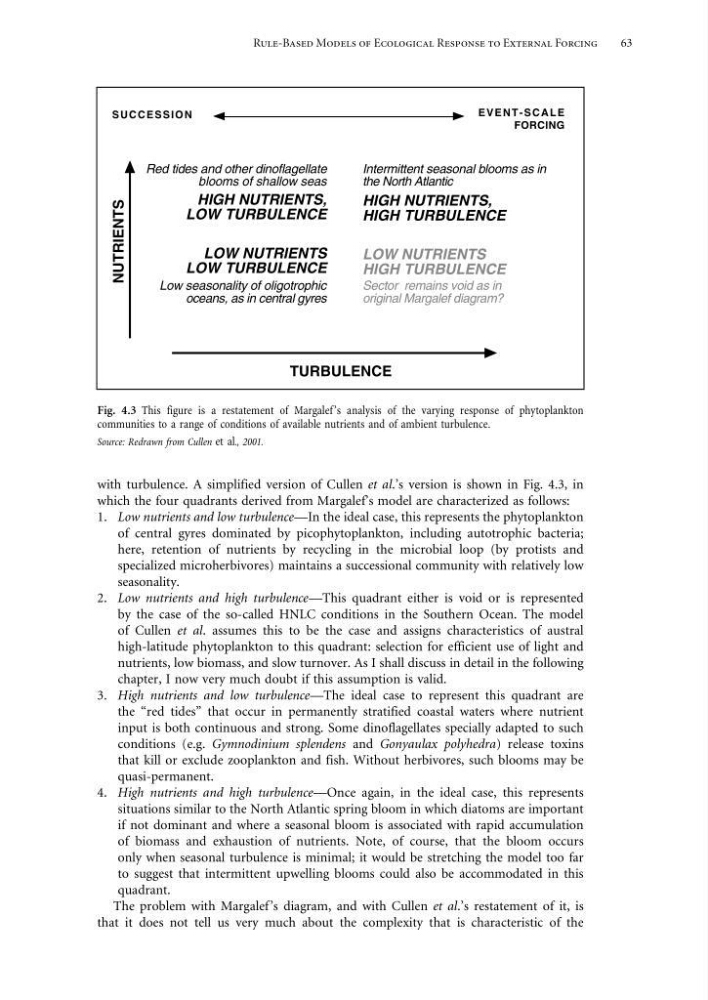
Fig. 4.3 This figure is a restatement of Margalef ’s analysis of the varying response of phytoplankton
communities to a range of conditions of available nutrients and of ambient turbulence.
Source: Redrawn from Cullen et al., 2001.
with turbulence. A simplified version of Cullen et al.’s version is shown in Fig. 4.3, in
which the four quadrants derived from Margalef’s model are characterized as follows:
1. Low nutrients and low turbulence—In the ideal case, this represents the phytoplankton
of central gyres dominated by picophytoplankton, including autotrophic bacteria;
here, retention of nutrients by recycling in the microbial loop (by protists and
specialized microherbivores) maintains a successional community with relatively low
seasonality.
2. Low nutrients and high turbulence—This quadrant either is void or is represented
by the case of the so-called HNLC conditions in the Southern Ocean. The model
of Cullen et al. assumes this to be the case and assigns characteristics of austral
high-latitude phytoplankton to this quadrant: selection for efficient use of light and
nutrients, low biomass, and slow turnover. As I shall discuss in detail in the following
chapter, I now very much doubt if this assumption is valid.
3. High nutrients and low turbulence—The ideal case to represent this quadrant are
the “red tides” that occur in permanently stratified coastal waters where nutrient
input is both continuous and strong. Some dinoflagellates specially adapted to such
conditions (e.g. Gymnodinium splendens and Gonyaulax polyhedra) release toxins
that kill or exclude zooplankton and fish. Without herbivores, such blooms may be
quasi-permanent.
4. High nutrients and high turbulence—Once again, in the ideal case, this represents
situations similar to the North Atlantic spring bloom in which diatoms are important
if not dominant and where a seasonal bloom is associated with rapid accumulation
of biomass and exhaustion of nutrients. Note, of course, that the bloom occurs
only when seasonal turbulence is minimal; it would be stretching the model too far
to suggest that intermittent upwelling blooms could also be accommodated in this
quadrant.
The problem with Margalef’s diagram, and with Cullen et al.’s restatement of it, is
that it does not tell us very much about the complexity that is characteristic of the
63
TURBULENCE
NUTRIENTS
LOW NUTRIENTS
LOW TURBULENCE
HIGH NUTRIENTS,
LOW TURBULENCE
Red tides and other dinoflagellate
blooms of shallow seas
Low seasonality of oligotrophic
oceans, as in central gyres
HIGH NUTRIENTS,
HIGH TURBULENCE
LOW NUTRIENTS
HIGH TURBULENCE
Intermittent seasonal blooms as in
the North Atlantic
Sector remains void as in
original Margalef diagram?
EVENT-SCALE
FORCING
SUCCESSION
Fig. 4.3 This figure is a restatement of Margalef ’s analysis of the varying response of phytoplankton
communities to a range of conditions of available nutrients and of ambient turbulence.
Source: Redrawn from Cullen et al., 2001.
with turbulence. A simplified version of Cullen et al.’s version is shown in Fig. 4.3, in
which the four quadrants derived from Margalef’s model are characterized as follows:
1. Low nutrients and low turbulence—In the ideal case, this represents the phytoplankton
of central gyres dominated by picophytoplankton, including autotrophic bacteria;
here, retention of nutrients by recycling in the microbial loop (by protists and
specialized microherbivores) maintains a successional community with relatively low
seasonality.
2. Low nutrients and high turbulence—This quadrant either is void or is represented
by the case of the so-called HNLC conditions in the Southern Ocean. The model
of Cullen et al. assumes this to be the case and assigns characteristics of austral
high-latitude phytoplankton to this quadrant: selection for efficient use of light and
nutrients, low biomass, and slow turnover. As I shall discuss in detail in the following
chapter, I now very much doubt if this assumption is valid.
3. High nutrients and low turbulence—The ideal case to represent this quadrant are
the “red tides” that occur in permanently stratified coastal waters where nutrient
input is both continuous and strong. Some dinoflagellates specially adapted to such
conditions (e.g. Gymnodinium splendens and Gonyaulax polyhedra) release toxins
that kill or exclude zooplankton and fish. Without herbivores, such blooms may be
quasi-permanent.
4. High nutrients and high turbulence—Once again, in the ideal case, this represents
situations similar to the North Atlantic spring bloom in which diatoms are important
if not dominant and where a seasonal bloom is associated with rapid accumulation
of biomass and exhaustion of nutrients. Note, of course, that the bloom occurs
only when seasonal turbulence is minimal; it would be stretching the model too far
to suggest that intermittent upwelling blooms could also be accommodated in this
quadrant.
The problem with Margalef’s diagram, and with Cullen et al.’s restatement of it, is
that it does not tell us very much about the complexity that is characteristic of the