

416
Chapter 11: The Pacific Ocean
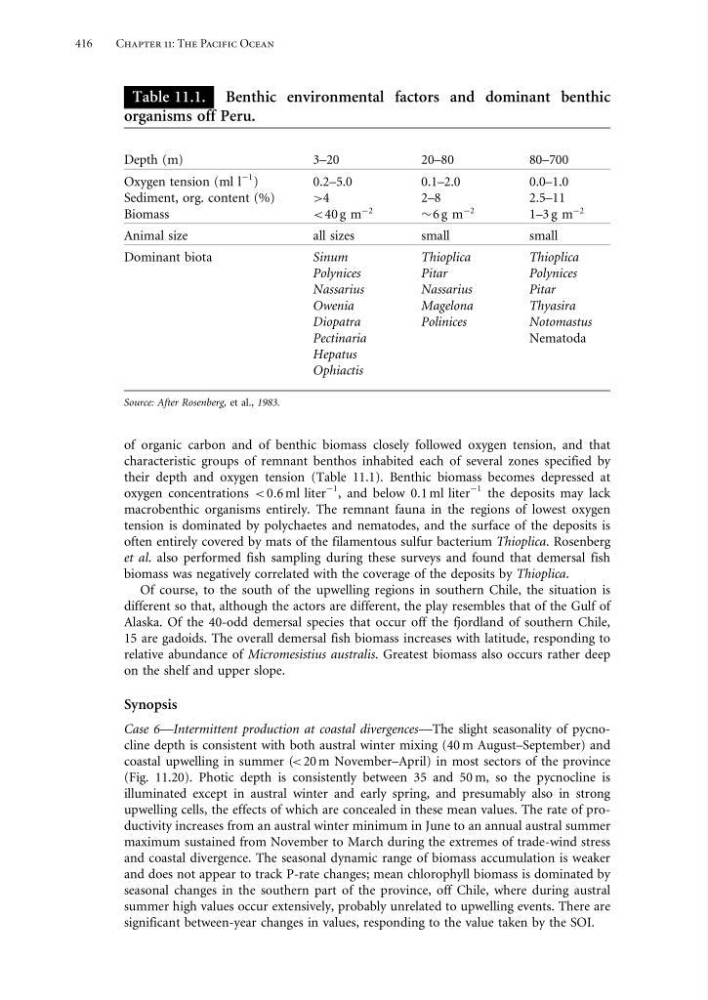
Table 11.1. Benthic environmental factors and dominant benthic
organisms off Peru.
Depth (m)
3–20
20–80
80–700
Oxygen tension (ml l
−1 )
0.2–5.0
0.1–2.0
0.0–1.0
Sediment, org. content (%)
>4
2–8
2.5–11
Biomass
<40 g m
−2
∼6 g m
−2
1–3 g m
−2
Animal size
all sizes
small
small
Dominant biota
Sinum
Polynices
Nassarius
Owenia
Diopatra
Pectinaria
Hepatus
Ophiactis
Thioplica
Pitar
Nassarius
Magelona
Polinices
Thioplica
Polynices
Pitar
Thyasira
Notomastus
Nematoda
Source: After Rosenberg, et al., 1983.
of organic carbon and of benthic biomass closely followed oxygen tension, and that
characteristic groups of remnant benthos inhabited each of several zones specified by
their depth and oxygen tension (Table 11.1). Benthic biomass becomes depressed at
oxygen concentrations < 06 ml liter
−1 , and below 01 ml liter
−1 the deposits may lack
macrobenthic organisms entirely. The remnant fauna in the regions of lowest oxygen
tension is dominated by polychaetes and nematodes, and the surface of the deposits is
often entirely covered by mats of the filamentous sulfur bacterium Thioplica. Rosenberg
et al. also performed fish sampling during these surveys and found that demersal fish
biomass was negatively correlated with the coverage of the deposits by Thioplica.
Of course, to the south of the upwelling regions in southern Chile, the situation is
different so that, although the actors are different, the play resembles that of the Gulf of
Alaska. Of the 40-odd demersal species that occur off the fjordland of southern Chile,
15 are gadoids. The overall demersal fish biomass increases with latitude, responding to
relative abundance of Micromesistius australis. Greatest biomass also occurs rather deep
on the shelf and upper slope.
Synopsis
Case 6—Intermittent production at coastal divergences—The slight seasonality of pycnocline depth is consistent with both austral winter mixing (40 m August–September) and
coastal upwelling in summer (<20 m November–April) in most sectors of the province
(Fig. 11.20). Photic depth is consistently between 35 and 50 m, so the pycnocline is
illuminated except in austral winter and early spring, and presumably also in strong
upwelling cells, the effects of which are concealed in these mean values. The rate of productivity increases from an austral winter minimum in June to an annual austral summer
maximum sustained from November to March during the extremes of trade-wind stress
and coastal divergence. The seasonal dynamic range of biomass accumulation is weaker
and does not appear to track P-rate changes; mean chlorophyll biomass is dominated by
seasonal changes in the southern part of the province, off Chile, where during austral
summer high values occur extensively, probably unrelated to upwelling events. There are
significant between-year changes in values, responding to the value taken by the SOI.
Chapter 11: The Pacific Ocean
Table 11.1. Benthic environmental factors and dominant benthic
organisms off Peru.
Depth (m)
3–20
20–80
80–700
Oxygen tension (ml l
−1 )
0.2–5.0
0.1–2.0
0.0–1.0
Sediment, org. content (%)
>4
2–8
2.5–11
Biomass
<40 g m
−2
∼6 g m
−2
1–3 g m
−2
Animal size
all sizes
small
small
Dominant biota
Sinum
Polynices
Nassarius
Owenia
Diopatra
Pectinaria
Hepatus
Ophiactis
Thioplica
Pitar
Nassarius
Magelona
Polinices
Thioplica
Polynices
Pitar
Thyasira
Notomastus
Nematoda
Source: After Rosenberg, et al., 1983.
of organic carbon and of benthic biomass closely followed oxygen tension, and that
characteristic groups of remnant benthos inhabited each of several zones specified by
their depth and oxygen tension (Table 11.1). Benthic biomass becomes depressed at
oxygen concentrations < 06 ml liter
−1 , and below 01 ml liter
−1 the deposits may lack
macrobenthic organisms entirely. The remnant fauna in the regions of lowest oxygen
tension is dominated by polychaetes and nematodes, and the surface of the deposits is
often entirely covered by mats of the filamentous sulfur bacterium Thioplica. Rosenberg
et al. also performed fish sampling during these surveys and found that demersal fish
biomass was negatively correlated with the coverage of the deposits by Thioplica.
Of course, to the south of the upwelling regions in southern Chile, the situation is
different so that, although the actors are different, the play resembles that of the Gulf of
Alaska. Of the 40-odd demersal species that occur off the fjordland of southern Chile,
15 are gadoids. The overall demersal fish biomass increases with latitude, responding to
relative abundance of Micromesistius australis. Greatest biomass also occurs rather deep
on the shelf and upper slope.
Synopsis
Case 6—Intermittent production at coastal divergences—The slight seasonality of pycnocline depth is consistent with both austral winter mixing (40 m August–September) and
coastal upwelling in summer (<20 m November–April) in most sectors of the province
(Fig. 11.20). Photic depth is consistently between 35 and 50 m, so the pycnocline is
illuminated except in austral winter and early spring, and presumably also in strong
upwelling cells, the effects of which are concealed in these mean values. The rate of productivity increases from an austral winter minimum in June to an annual austral summer
maximum sustained from November to March during the extremes of trade-wind stress
and coastal divergence. The seasonal dynamic range of biomass accumulation is weaker
and does not appear to track P-rate changes; mean chlorophyll biomass is dominated by
seasonal changes in the southern part of the province, off Chile, where during austral
summer high values occur extensively, probably unrelated to upwelling events. There are
significant between-year changes in values, responding to the value taken by the SOI.