

53
Various combinations of treatments have been used with slightly greater success,
but considerable woody plant regrowth still occurred and expenses were high.
Without fi res, treatments are usually expensive with limited success. Management
of heavily encroached grasslands or savannas usually includes some degree of
mechanical or chemical treatment, but success is short term and is still limited.
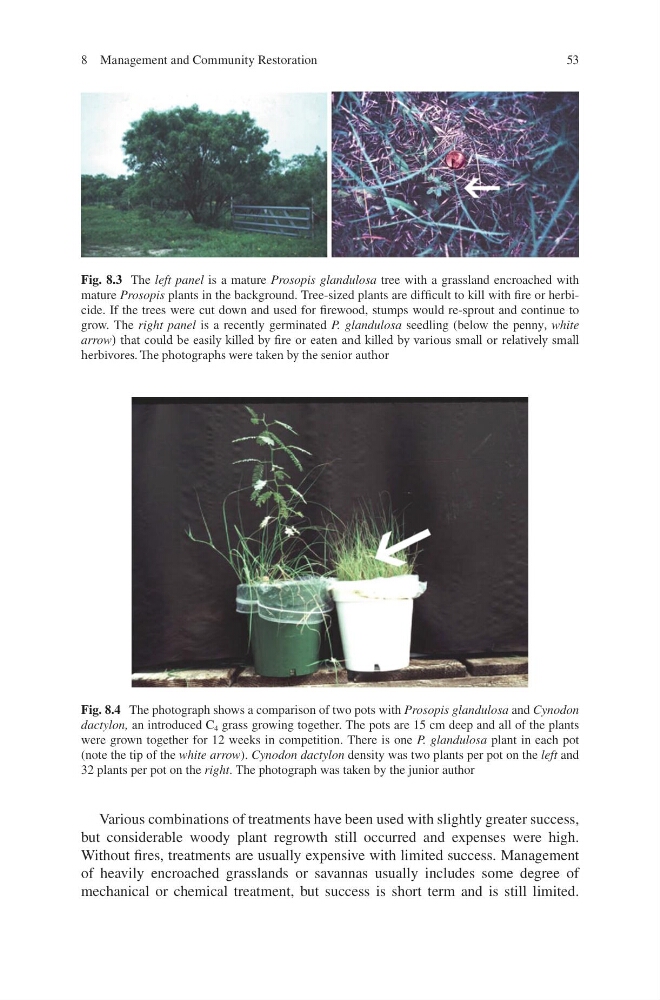
Fig. 8.3 The left panel is a mature Prosopis glandulosa tree with a grassland encroached with
mature Prosopis plants in the background. Tree-sized plants are diffi cult to kill with fi re or herbicide. If the trees were cut down and used for fi rewood, stumps would re-sprout and continue to
grow. The right panel is a recently germinated P. glandulosa seedling (below the penny, white
arrow) that could be easily killed by fi re or eaten and killed by various small or relatively small
herbivores. Th e photographs were taken by the senior author
Fig. 8.4 The photograph shows a comparison of two pots with Prosopis glandulosa and Cynodon
dactylon, an introduced C 4 grass growing together. The pots are 15 cm deep and all of the plants
were grown together for 12 weeks in competition. There is one P. glandulosa plant in each pot
(note the tip of the white arrow ). Cynodon dactylon density was two plants per pot on the left and
32 plants per pot on the right . The photograph was taken by the junior author
8 Management and Community Restoration
Various combinations of treatments have been used with slightly greater success,
but considerable woody plant regrowth still occurred and expenses were high.
Without fi res, treatments are usually expensive with limited success. Management
of heavily encroached grasslands or savannas usually includes some degree of
mechanical or chemical treatment, but success is short term and is still limited.
Fig. 8.3 The left panel is a mature Prosopis glandulosa tree with a grassland encroached with
mature Prosopis plants in the background. Tree-sized plants are diffi cult to kill with fi re or herbicide. If the trees were cut down and used for fi rewood, stumps would re-sprout and continue to
grow. The right panel is a recently germinated P. glandulosa seedling (below the penny, white
arrow) that could be easily killed by fi re or eaten and killed by various small or relatively small
herbivores. Th e photographs were taken by the senior author
Fig. 8.4 The photograph shows a comparison of two pots with Prosopis glandulosa and Cynodon
dactylon, an introduced C 4 grass growing together. The pots are 15 cm deep and all of the plants
were grown together for 12 weeks in competition. There is one P. glandulosa plant in each pot
(note the tip of the white arrow ). Cynodon dactylon density was two plants per pot on the left and
32 plants per pot on the right . The photograph was taken by the junior author
8 Management and Community Restoration