

34
When simulated herbivory (clipping one or the other species) was added to a
similar competition experiment with the same species both with and without nutrients, the results were complex but reveling (Van Auken 1994 ). Main experimental
treatments were signifi cant in the three-way factorial experiment for the grass
( Cynodon dactylon ) with signifi cant interactions. Thus, for the grass, dry mass harvested was dependent on the nutrient level (added or not added), herbivory treatment (grass clipped or not clipped), and in some cases the condition of the neighbor
(present, but clipped or not). When nutrients were added to the soil, dry mass of
C. dactylon grown alone but unclipped increased almost three times from 5 g/pot
aboveground dry mass to about 15 g/pot (not shown). Simulated herbivory or clipping in low nutrient soil had a small, negative effect on grass dry mass production,
but with nutrients added and clipping, there was an increase in dry mass. There was
little or no effect on grass dry mass when one V. farnesiana plant was grown with
the grass with or without nutrient addition or simulated herbivory (not shown).
Effects on V. farnesiana were quite different. Some of the main experimental
treatments were signifi cant in the three-way factorial experiment for the woody
legume with some signifi cant interactions. When nutrients were added to the soil,
dry mass production of V. farnesiana grown alone and unclipped was slightly greater
compared to dry mass when no nutrients were added (not signifi cant, Fig. 6.2 ).
When V. farnesiana was clipped, the clipped plants were 3–5 % of the non-clipped
plants with added nutrients having a small effect (Fig. 6.2 ). When V. farnesiana was
grown with the grass, woody legume dry mass was reduced 95–98 % if the grass
was not clipped. If the grass was clipped, but nutrients were added, V. farnesiana
dry mass was suppressed 60 % compared to growth alone and not clipping
the woody plant (left panel). In the same treatment without added nutrients
(right panel), V. farnesiana was suppressed 96 % (Fig. 6.2 ) (Van Auken 1994 ).
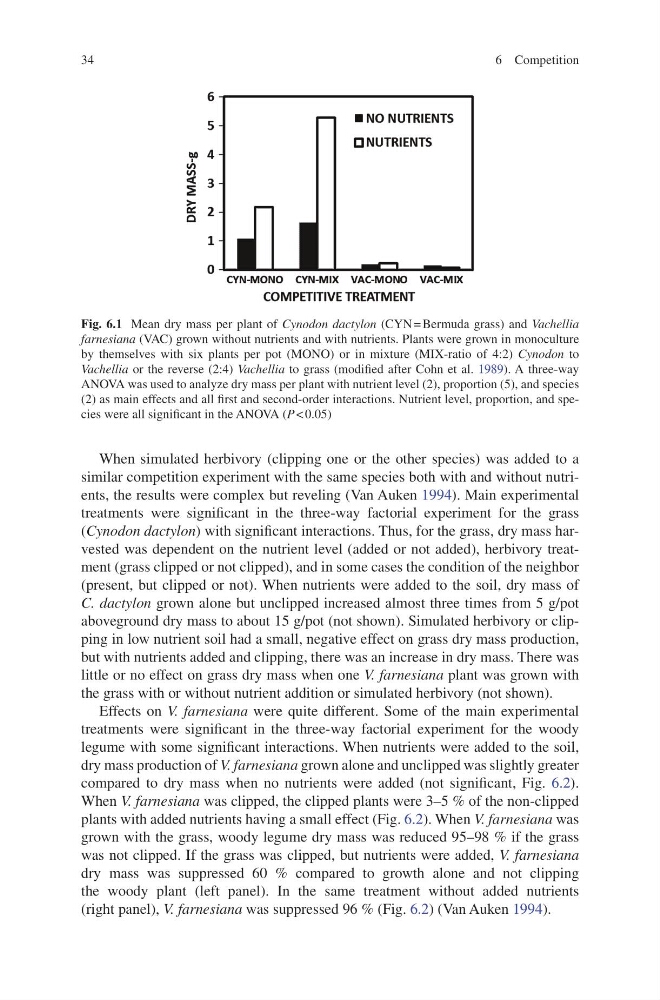
Fig. 6.1 Mean dry mass per plant of Cynodon dactylon (CYN = Bermuda grass) and Vachellia
farnesiana (VAC) grown without nutrients and with nutrients. Plants were grown in monoculture
by themselves with six plants per pot (MONO) or in mixture (MIX-ratio of 4:2) Cynodon to
Vachellia or the reverse (2:4) Vachellia to grass (modifi ed after Cohn et al. 1989 ). A three-way
ANOVA was used to analyze dry mass per plant with nutrient level (2), proportion (5), and species
(2) as main effects and all fi rst and second-order interactions. Nutrient level, proportion, and species were all signifi cant in the ANOVA ( P < 0.05)
6 Competition
When simulated herbivory (clipping one or the other species) was added to a
similar competition experiment with the same species both with and without nutrients, the results were complex but reveling (Van Auken 1994 ). Main experimental
treatments were signifi cant in the three-way factorial experiment for the grass
( Cynodon dactylon ) with signifi cant interactions. Thus, for the grass, dry mass harvested was dependent on the nutrient level (added or not added), herbivory treatment (grass clipped or not clipped), and in some cases the condition of the neighbor
(present, but clipped or not). When nutrients were added to the soil, dry mass of
C. dactylon grown alone but unclipped increased almost three times from 5 g/pot
aboveground dry mass to about 15 g/pot (not shown). Simulated herbivory or clipping in low nutrient soil had a small, negative effect on grass dry mass production,
but with nutrients added and clipping, there was an increase in dry mass. There was
little or no effect on grass dry mass when one V. farnesiana plant was grown with
the grass with or without nutrient addition or simulated herbivory (not shown).
Effects on V. farnesiana were quite different. Some of the main experimental
treatments were signifi cant in the three-way factorial experiment for the woody
legume with some signifi cant interactions. When nutrients were added to the soil,
dry mass production of V. farnesiana grown alone and unclipped was slightly greater
compared to dry mass when no nutrients were added (not signifi cant, Fig. 6.2 ).
When V. farnesiana was clipped, the clipped plants were 3–5 % of the non-clipped
plants with added nutrients having a small effect (Fig. 6.2 ). When V. farnesiana was
grown with the grass, woody legume dry mass was reduced 95–98 % if the grass
was not clipped. If the grass was clipped, but nutrients were added, V. farnesiana
dry mass was suppressed 60 % compared to growth alone and not clipping
the woody plant (left panel). In the same treatment without added nutrients
(right panel), V. farnesiana was suppressed 96 % (Fig. 6.2 ) (Van Auken 1994 ).
Fig. 6.1 Mean dry mass per plant of Cynodon dactylon (CYN = Bermuda grass) and Vachellia
farnesiana (VAC) grown without nutrients and with nutrients. Plants were grown in monoculture
by themselves with six plants per pot (MONO) or in mixture (MIX-ratio of 4:2) Cynodon to
Vachellia or the reverse (2:4) Vachellia to grass (modifi ed after Cohn et al. 1989 ). A three-way
ANOVA was used to analyze dry mass per plant with nutrient level (2), proportion (5), and species
(2) as main effects and all fi rst and second-order interactions. Nutrient level, proportion, and species were all signifi cant in the ANOVA ( P < 0.05)
6 Competition